South Korea is one of the world’s most mature and demanding e-commerce markets. By 2025, the country’s online shopping transaction value had reached roughly KRW 272.0 trillion (about US$190 billion), underlining the scale of the opportunity for foreign brands entering Korea through digital channels.
Just as importantly, online retail in Korea has now reached a level where it can no longer be treated as an optional channel. In practical terms, online commerce is already approaching the 50% level of retail activity, and in some categories it has become the dominant route to market. For many local brands, marketplaces are not simply one sales channel among many—they can be the primary, and sometimes the only, meaningful sales channel. This means foreign brands can often compete directly with Korean brands on almost the same terms, provided they choose the right entry structure and execute properly.
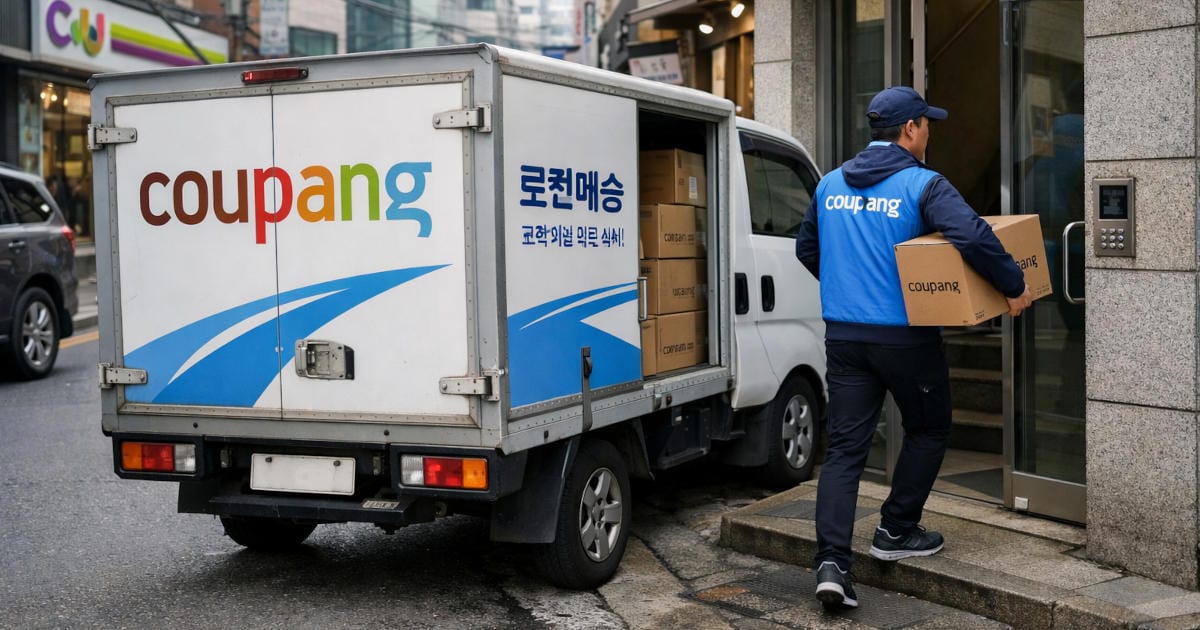
For foreign sellers, however, success in Korea is not simply about listing products online. The Korean market is highly localized, strongly platform-driven, and shaped by consumer expectations around fast delivery, accurate product presentation, domestic customer support, and frictionless returns. In practice, most foreign brands entering Korea focus first on major platforms such as Coupang and Naver, while also evaluating other broad marketplaces and category-specific platforms depending on their products.
Not every marketplace operates the same way for foreign sellers. Some leading platforms allow overseas brands to enter through a global seller structure, while other channels are more restrictive and effectively require a local seller setup—either through a Korean agent or a Korean corporate entity.
For that reason, choosing the right seller model from the beginning is one of the most important strategic decisions a foreign brand can make.
UNDERSTANDING THE THREE MAIN SELLER MODELS
In practical terms, foreign brands usually enter Korean marketplaces through one of three operating structures:
- Global Seller Model
- Agent Model
- Local Korean Entity Model
These are not always formal legal labels used uniformly by every marketplace. Rather, they are practical operating models that describe how the store is registered, who legally sells the product, who handles compliance and importation, and how fulfillment is managed inside Korea.
1. GLOBAL SELLER MODEL
The global seller model is typically the easiest way for a foreign brand to test the Korean market with relatively low upfront commitment.
Under this structure, the seller remains overseas and sells through a marketplace’s cross-border or international seller channel. Products are shipped directly from abroad to Korean consumers on an order-by-order basis, without the need to establish a Korean company at the outset.
This model is attractive because it reduces the initial administrative burden. A foreign brand can begin selling without immediately setting up a Korean entity, local accounting structure, or domestic warehousing arrangement. For early-stage market validation, niche products, or pilot launches, this can be a useful first step.
However, this model should not be misunderstood as being fully hands-off in practical terms. Even when the seller remains overseas, localization is still critical. Product titles, descriptions, option names, size information, usage instructions, and customer-facing content must be properly translated and adapted for Korean shoppers. In many cases, success also depends on presenting a local contact point, such as a Korean address and local phone number, because these details are often visible on product pages and directly affect buyer trust. On some marketplaces, including certain Naver Smart Store setups, a Korean address may be mandatory. Coupang was aware of this and created Service Provider Network Partner to support and provide such service by third party partners.
The other major limitation is competitiveness. Because products are shipped internationally per order, delivery is slower, return handling is more difficult, and customer satisfaction can suffer if expectations are not managed carefully. This model also generally prevents the seller from using the marketplace’s local warehouse-based fulfillment benefits, which are often important for conversion and visibility.
In addition, some product categories may be restricted or less practical under a global seller structure, especially where product rules, customs treatment, or marketplace policy make cross-border selling less flexible.
For most brands, the global seller model works best as a market-testing model, not necessarily as the strongest long-term structure.
2. AGENT MODEL
The agent model is often the fastest way for a foreign brand to operate like a local seller in Korea without establishing its own Korean company.
Under this structure, a Korean company acts as the local seller and operates the marketplace account domestically on behalf of the foreign brand. This local party may function as the seller of record, merchant of record, importer, operational partner, or a hybrid of these roles, depending on how the arrangement is structured.
The key strategic advantage of the agent model is speed. Because the selling entity is already local, the products can usually be stocked inside Korea much faster than if the foreign brand were to establish its own Korean company first. That means the brand can place inventory into the relevant marketplace warehouse network and access local fulfillment advantages that are not available to overseas-only sellers.
This is particularly important on major Korean platforms, where domestic inventory placement can unlock better operational performance, faster delivery, and stronger marketplace visibility. For example, this agent model structure can access programs such as Coupang Rocket Growth, allowing products to benefit from domestic fulfillment infrastructure, stronger algorithm support, and platform trust signals such as special badges tied to local fulfillment and service quality.
The agent model can also support the foreign brand’s identity more effectively than many assume. Although the account is legally operated by the local seller, it is still possible in some marketplace environments to build a dedicated store presence for the foreign brand, rather than mixing multiple brands together under a generic storefront. In the right setup, separate store pages, brand-focused displays, and eventually even larger brand store structures can be developed on major platforms such as Coupang and Naver when sales volume justifies that investment.
Operationally, this model also improves the customer experience. Products are shipped domestically, returns are handled locally, Korean-language customer support is easier to maintain, and consumers are more likely to trust the seller when they see a local operating structure behind the listing.
That said, the agent model requires careful control over business terms. Since the local account belongs to a Korean entity, the foreign brand should clearly define ownership and control over:
- Trademark and brand usage
- Pricing authority
- Inventory ownership
- Payment settlement
- Customer data access
- Marketplace content control
- Exit and transfer rights
When structured correctly, the agent model is often the most practical balance between speed, local competitiveness, and lower setup burden.
3. LOCAL KOREAN ENTITY MODEL
The local Korean entity model gives the foreign brand the highest degree of control, but it also comes with the greatest administrative responsibility.
In this structure, the foreign company establishes its own Korean legal presence—such as a subsidiary or branch—and opens marketplace accounts under that Korean business. The local entity becomes the direct contracting seller, manages tax and accounting obligations, and controls the marketplace relationship in its own name.
At first glance, this model may appear operationally heavy, but in practice Koren business and company registration can still be implemented remotely. A foreign brand does not necessarily need to hire local employees from day one in order to use this structure. Many functions can be outsourced to specialized Korean service providers, including:
- Import procedures
- Customs clearance
- Product registration and compliance coordination
- Labeling and documentation support
- Accounting and bookkeeping
- Corporate filings and administrative maintenance
- Local warehousing and logistics support
This means a foreign company can build a direct Korean selling structure without immediately building a full internal Korea team.
The main advantage is control. The brand owns the Korean entity, the marketplace account, the commercial structure, and the long-term operating base. This is often the preferred route for companies that want to scale seriously in Korea, build deeper marketplace assets, and avoid dependence on a third-party seller relationship.
The main drawback is overhead. Even if operations are outsourced, the company must still carry the ongoing cost of maintaining a local corporate structure. That usually includes recurring expenses for:
- Monthly accounting and bookkeeping
- Tax compliance and filings
- Corporate administration
- Banking and payout management
- Local registered office or business address requirements
- Other maintenance costs tied to the Korean entity
For brands with long-term commitment and meaningful sales potential, this can be the strongest strategic model. But it should be entered with a realistic understanding of the recurring administrative burden.
WHICH MODEL IS RIGHT?
The right model depends on the brand’s goals, timeline, budget, and product category.
A Global seller model is typically suitable when the brand wants to validate demand first, keep fixed costs low, and accept the limitations of slower shipping and weaker local positioning.
An Agent model is often the best fit when the brand wants to move quickly, hold inventory locally, access marketplace warehouse programs, and compete more effectively on speed and trust—without waiting to establish a Korean company.
A Local Korean entity model is usually the strongest long-term choice when the brand wants full operational control, direct ownership of the marketplace presence, and a scalable local business foundation, even if much of the day-to-day work is outsourced.
WHY THIS DECISION MATTERS EARLY
One of the most common mistakes foreign brands make is assuming they can start with any model and easily change later without consequences.
In reality, a change in seller structure may require a new marketplace account, a new operational setup, or a new legal seller identity. That can affect review history, search ranking, store authority, advertising efficiency, and customer trust signals built over time.
For that reason, seller model selection should be treated as a commercial strategy decision, not just an administrative detail.
A brand that expects to localize inventory, invest in ads, and build long-term traction in Korea should think carefully before launching under a structure that may later become restrictive.
FINAL STRATEGIC CONSIDERATIONS
Regardless of which model is chosen, foreign brands should not enter the Korean market without first conducting a proper product and market study.
Before launch, it is essential to understand:
- Who the direct competitors are
- How their pricing is positioned
- What product specifications and option structures are standard
- How Korean buyers compare listings
- What delivery, packaging, and return expectations already exist in the category
Without this groundwork, even a strong product can struggle because the listing, pricing, or positioning is misaligned with the market.
Once the decision to enter Korea is made, traffic generation must also be planned realistically. A marketplace store should not be treated as if it will gain visibility automatically. As a practical starting benchmark, brands should be prepared to allocate at least US$30 per day in paid advertising for no less than six months in order to generate sustained traffic, collect data, improve conversion performance, and build ranking momentum. At that pace, the ad commitment is roughly US$5,400 over a six-month launch cycle.
In Korea’s marketplace ecosystem, execution matters as much as product quality. The brands that perform well are usually not the ones that simply open a store, but the ones that choose the right operating model, localize properly, and invest consistently enough to gain traction.